Medical Scribe vs. Virtual Physician: Defining Critical Differences
Oct 15, 2025

Medically reviewed by
Christian Fernandez MD, MSc
—
Written by
Christian Fernandez MD, MSc
—
Updated on
Oct 15, 2025
Explore the essential differences between medical scribes and virtual physicians to understand their unique roles in healthcare. This article clarifies how each contributes to operational efficiency, clinical accuracy, and patient care — highlighting their distinct skill sets, responsibilities, and impact on your practice. Whether you're a healthcare administrator seeking staffing solutions or a professional considering career options, grasping these differences will help you make informed decisions for your clinical support needs.
Core Responsibilities and Scope of Practice
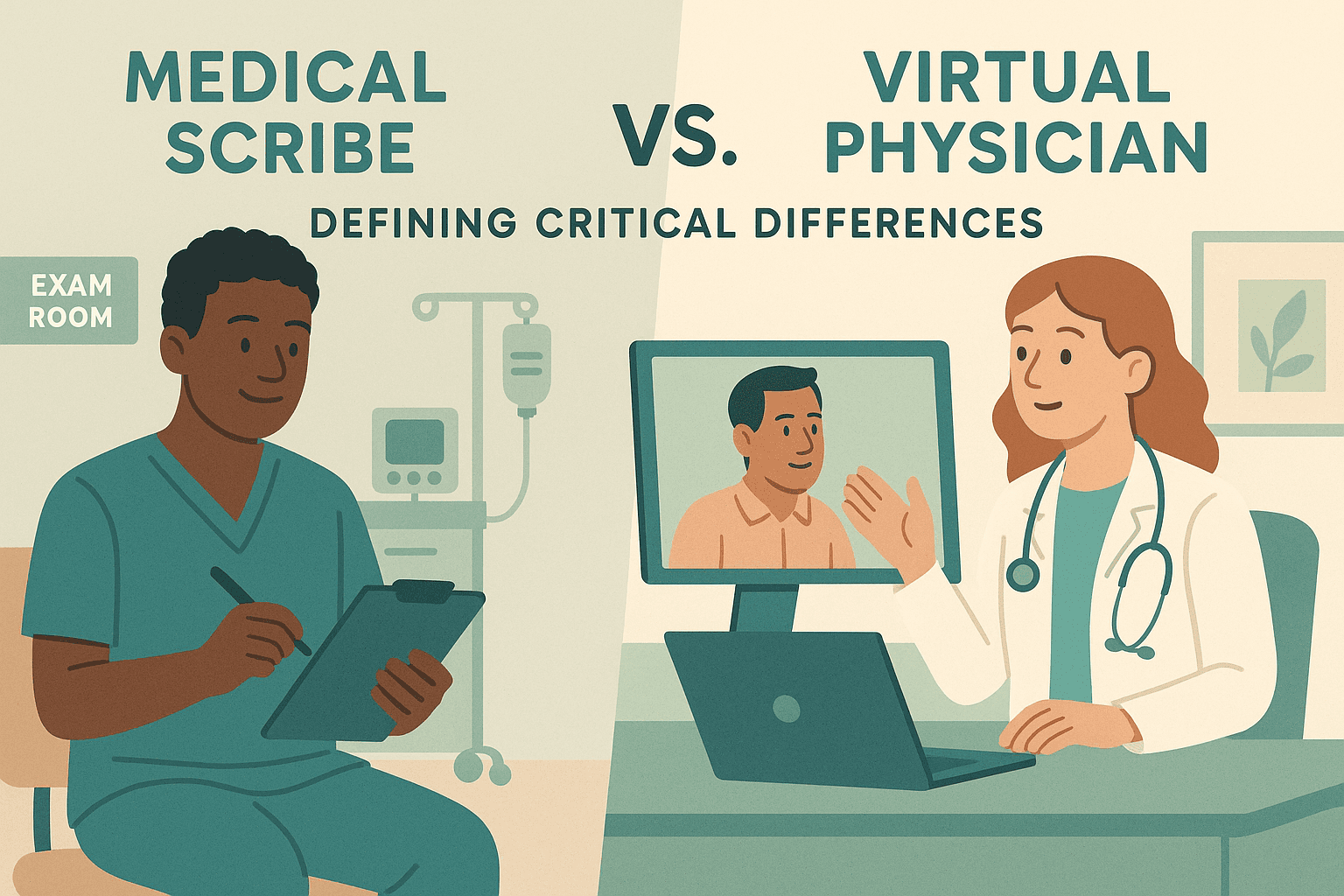
The fundamental difference between a medical scribe and a virtual physician lies in their core responsibilities. Medical scribes serve as documentation specialists, record events during patient encounters based on physician input, and ensure accurate, real-time charting within the Electronic Health Record (EHR). They do not provide clinical judgments or patient care decisions. Conversely, virtual physicians bring clinical authority—they perform telehealth consultations, diagnose, develop treatment plans, and make clinical decisions remotely, often performing tasks traditionally reserved for onsite doctors. Understanding this scope distinction clarifies each role’s contribution to healthcare delivery.
Qualifications and Training Requirements
Medical scribes typically have certifications or coursework in medical terminology, anatomy, and medical documentation but do not require medical licensure. They focus primarily on administrative support, with training geared toward EHR navigation and documentation standards. Virtual physicians, on the other hand, are licensed healthcare providers with medical degrees, residency experience, and clinical competence. Their training equips them to assess patient symptoms, interpret diagnostic data, and make medical decisions remotely. This difference underscores the importance of credentials and legal authority for each role.
Clinical Autonomy and Decision-Making
A key differentiator is clinical autonomy. Virtual physicians operate with full clinical decision-making authority—they evaluate patient conditions, prescribe medications, and determine treatment plans, all remotely. Medical scribes have no clinical authority; they act as support personnel, transcribing physician-patient interactions accurately without influencing medical decisions. Recognizing this distinction ensures practices deploy each role appropriately—scribes for documentation efficiency, physicians for patient care.
Impact on Patient Care and Clinical Outcomes
Virtual physicians directly influence patient care outcomes through real-time diagnoses, treatment, and follow-up, enhancing care continuity and patient satisfaction. They may provide telehealth consultations, prescribe medications, or oversee chronic disease management remotely. Medical scribes, however, primarily improve clinical workflow by ensuring complete, accurate documentation—an indirect but crucial contribution that supports quality care and billing accuracy. Knowing their different impacts guides strategic staffing to optimize both clinical and administrative aspects.
Legal and Regulatory Considerations
Virtual physicians operate within a framework of medical licensure, HIPAA compliance, and scope-of-practice laws, which govern their remote clinical activities. They assume legal responsibility for patient assessments and treatments. Medical scribes, as non-clinical personnel, focus on document integrity and do not engage in clinical decision-making or patient management, thus avoiding certain regulatory constraints but still adhering to privacy standards. Understanding these regulatory boundaries is essential for compliant and effective staffing.
Technology and Workflow Integration
While both roles rely heavily on digital tools, their technological needs differ. Scribes primarily use EHR systems to document physician-patient encounters accurately. Virtual physicians require telehealth platforms, secure communication channels, and remote access to medical records for assessment and decision-making. Proper workflow integration ensures each role functions smoothly within your practice’s operational processes, maximizing their respective efficiencies.
Cost Implications and Staffing Strategies
Typically, medical scribes are more cost-effective for practices seeking to improve documentation efficiency without adding clinical decision-makers. Virtual physicians involve higher salaries but provide essential clinical expertise, especially during telehealth expansion or complex case management. Strategically deploying scribes for administrative support and virtual physicians for clinical care ensures optimal resource allocation, balancing cost and quality in your healthcare delivery model.
Medical scribes and virtual physicians serve distinct yet complementary roles in healthcare practices. Recognizing their critical differences—particularly around responsibilities, qualifications, and clinical authority—enables organizations to optimize staffing, improve workflow, and enhance patient outcomes. Whether aiming to boost documentation accuracy or deliver remote clinical care, understanding these roles helps in making strategic decisions aligned with your clinic’s goals.
Schedule a Consultation