Ensuring Compliance and Quality: How Virtual MDs Handle Documentation in Clinical Back Office
Nov 6, 2025

Medically reviewed by
Christain
—
Written by
Christian Fernandez, MD
—
Updated on
Nov 6, 2025
Discover how virtual MDs expertly manage documentation to uphold healthcare compliance and quality standards. This comprehensive guide explores their vital role in ensuring accurate medical records, HIPAA compliance, and operational efficiency for healthcare organizations. Learn how leveraging virtual medical doctors enhances patient safety, reduces administrative errors, and streamlines clinical workflows. Whether you are a healthcare administrator seeking reliable staffing solutions or a medical professional interested in virtual roles, this article provides actionable insights into the importance of virtual MDs in clinical back office operations.
Secure and HIPAA-Compliant Documentation Management
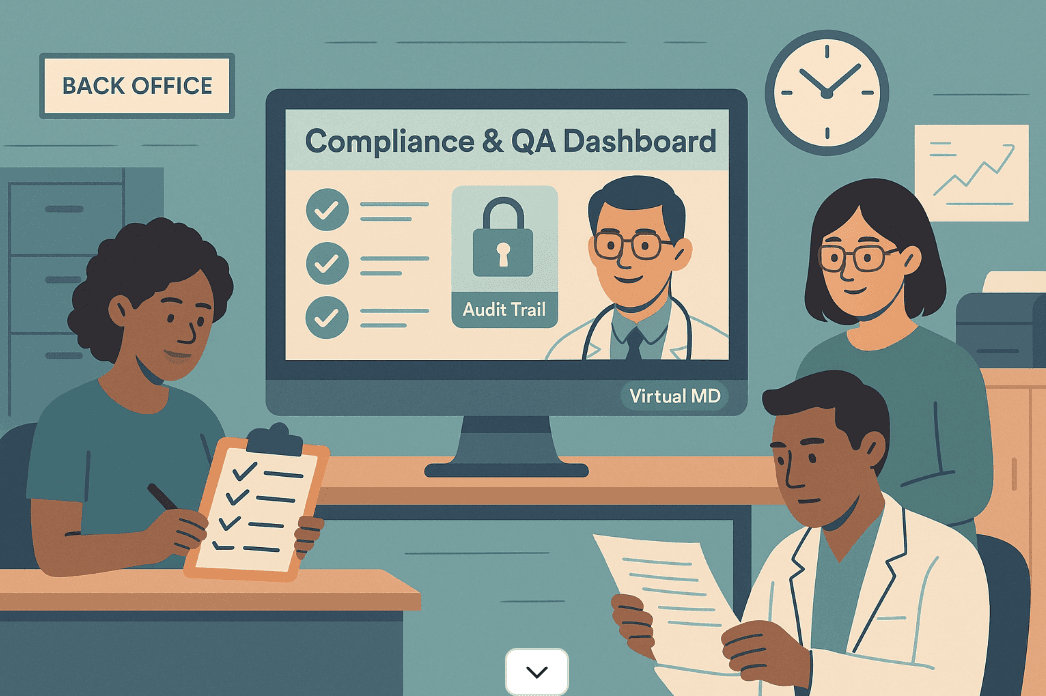
Virtual MDs play a crucial role in maintaining HIPAA compliance when handling sensitive patient records. They utilize encrypted electronic health record (EHR) systems that meet federal privacy standards, ensuring protected health information (PHI) remains confidential during documentation processes. By adhering to strict security protocols, virtual physicians prevent unauthorized access and data breaches, which are critical for legal compliance and patient trust. Implementing secure, cloud-based documentation solutions allows virtual MDs to access, review, and update clinical notes from any location while maintaining audit trails that track all modifications—a key element in compliance and quality assurance. This approach not only safeguards patient data but also enhances operational efficiency for healthcare organizations, reducing risks associated with documentation errors and non-compliance penalties.
Accurate and Consistent Medical Documentation
Ensuring the accuracy and consistency of clinical documentation is fundamental for delivering high-quality patient care and complying with healthcare regulations. Virtual MDs employ standardized templates and evidence-based protocols to document patient encounters thoroughly and precisely. Their expertise helps minimize discrepancies and inaccuracies in medical records, which are vital for safe clinical decision-making, billing accuracy, and legal protection. Moreover, virtual physicians are trained to document complex medical information clearly, reducing the likelihood of claim denials or audits due to incomplete or inconsistent records. Automated quality checks integrated into their documentation workflows further reinforce accuracy, enabling healthcare organizations to uphold regulatory standards and achieve better patient outcomes.
Enhanced Review and Quality Assurance Processes
Virtual MDs contribute significantly to continuous quality improvement through diligent documentation review. They perform regular audits of medical records to identify inconsistencies, incomplete data, or deviations from clinical guidelines. These reviews help ensure compliance with CMS and HIPAA regulations while supporting accreditation standards such as The Joint Commission. Deploying virtual physicians for documentation oversight reduces the burden on in-house staff and allows for scalable, remote quality assurance processes. This proactive approach enhances operational efficiency, reduces malpractice risks, and fosters a culture of excellence in clinical documentation. By integrating virtual MDs into the quality assurance workflow, healthcare organizations ensure that all documentation reflects accurate, compliant, and high-quality clinical information.
Streamlining Clinical Workflow and Communication
Virtual MDs streamline the clinical documentation process by serving as a dedicated resource for timely note-taking, coding, and record updates. Their remote access capabilities facilitate real-time collaboration with in-house teams, resulting in faster documentation turnover and improved workflow efficiency. Incorporating virtual physicians into clinical back office operations minimizes delays caused by physical absence or overburdened staff, ensuring prompt and accurate documentation for patient treatment plans and billing. Effective virtual communication tools further support seamless coordination, reducing administrative bottlenecks and promoting a smoother transition from patient encounter to record completion. This consolidation enhances overall operational efficiency, supports patient satisfaction, and helps healthcare facilities stay compliant with regulatory deadlines.
Supporting Bilingual Medical Documentation Needs
In diverse healthcare markets, bilingual virtual MDs are essential for accurate clinical documentation involving patients with limited English proficiency. They ensure that medical histories, consent forms, and discharge instructions are correctly translated and documented, maintaining compliance with language access regulations while preserving record integrity. Bilingual virtual doctors also facilitate clearer communication during telehealth consultations, reducing misunderstandings and misdocumentation that could impact patient safety and legal compliance. This targeted support enhances patient engagement, improves clinical outcomes, and aligns with healthcare organizations’ commitment to cultural competence. Employing bilingual virtual MDs is a strategic solution for clinics and hospitals aiming to uphold high standards of documentation quality in multilingual environments.
Reducing Administrative Costs and Increasing Efficiency
Virtual MDs contribute to cost savings by decreasing the need for physical staffing and office space dedicated to documentation tasks. Their remote availability allows healthcare organizations to optimize staffing levels, avoiding overtime costs and minimizing administrative overhead. By automating and offloading documentation duties, virtual physicians improve turnaround times and reduce errors that often lead to costly claims denials or legal issues. This shift enables in-house staff to focus on patient care rather than administrative chores, resulting in a more efficient, patient-centered operational model. It also allows healthcare facilities to scale their documentation capacity during peak times without compromising compliance or quality. Overall, integrating virtual MDs into clinical back office workflows drives operational cost savings while maintaining high standards of documentation and compliance.
Supporting Patient Satisfaction and Legal Risk Management
Accurate and timely documentation handled by virtual MDs directly impacts patient satisfaction and legal risk mitigation. When clinical notes are precise and comprehensive, patients experience better continuity of care and trust in their providers. Proper documentation also serves as a legal safeguard, providing a clear record of clinical decisions, patient interactions, and consent processes.
Virtual MDs ensure that documentation adheres to legal standards, reducing vulnerability to malpractice claims or audit penalties. Furthermore, their ability to promptly update records means healthcare providers can respond rapidly to patient inquiries or complaints, fostering transparency and confidence. Implementing virtual physicians for documentation management is a strategic move to enhance overall quality, compliance, and patient-centered care.
Schedule a Consultation