When Hiring Another MD Fails, Remote Physicians Deliver Success for Your Practice
Feb 17, 2026

Medically reviewed by
Christian Fernandez, MD
—
Written by
Christian Fernandez, MD
—
Updated on
Feb 17, 2026
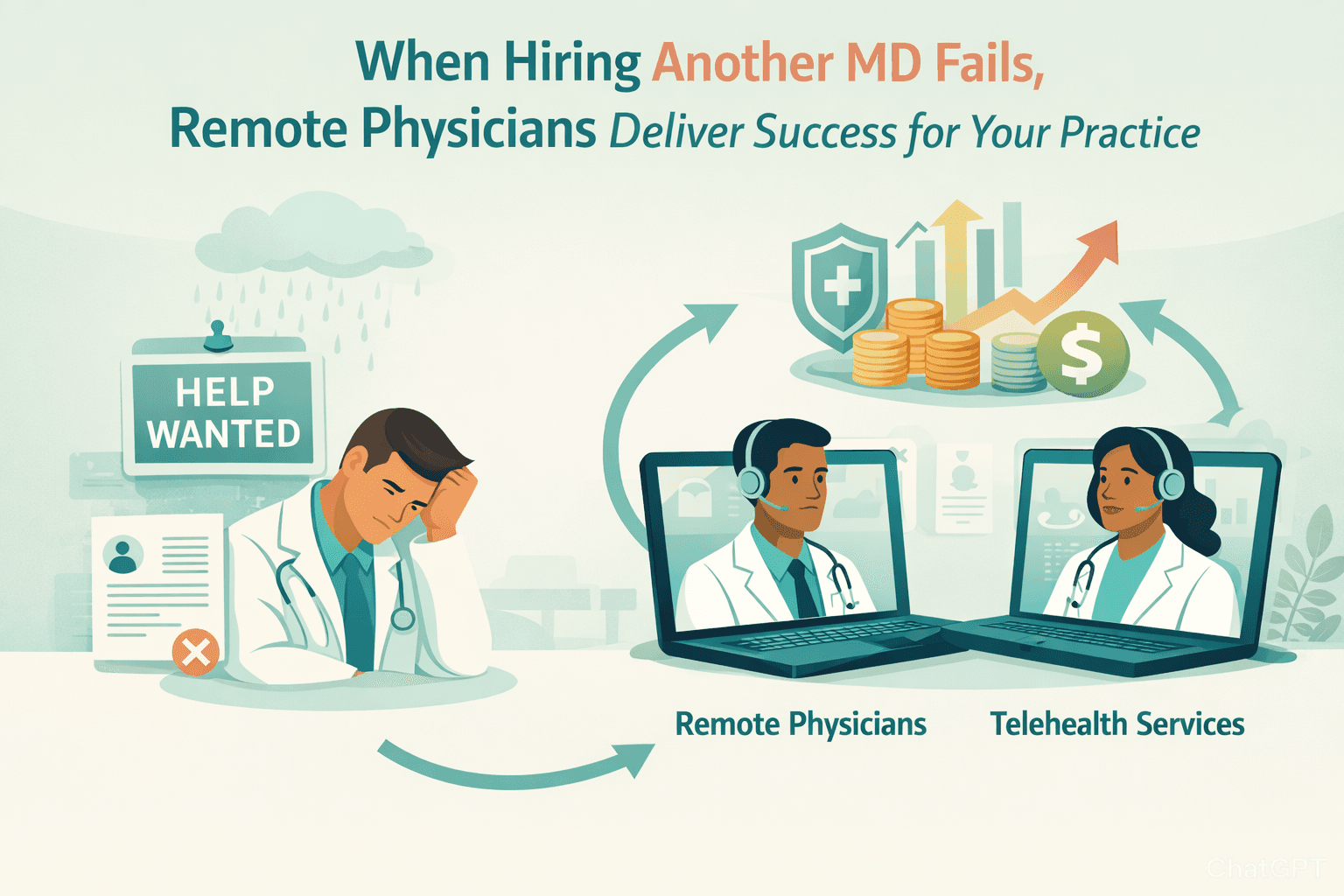
Expanding a medical practice by hiring additional in-house physicians is often perceived as the straightforward solution to increasing patient volume and service capacity. However, this approach can sometimes backfire—due to high costs, recruitment challenges, licensing hurdles, or integration issues. In contrast, employing remote physicians offers a flexible, cost-effective alternative that enables seamless growth without the complexities of onsite hiring. Remote physicians bring specialized expertise, broaden your service offerings, and improve operational efficiency—all while maintaining high standards of care and patient satisfaction. This blog explores why traditional hiring may fall short, how remote physicians can surpass expectations, and strategies for integrating virtual providers into your practice to achieve scalable success.
The Limitations and Challenges of Hiring Additional MDs On-Site
Traditional strategies to scaling a healthcare practice often revolve around recruiting more physicians for in-person care. While this approach seems logical, it’s fraught with obstacles. High recruiter's fees, lengthy onboarding processes, and geographical licensing requirements significantly delay growth. Moreover, the costs associated with additional salaries, benefits, and office space can strain your operational budget. Cultural integration and team cohesion are also hurdles, as new staff may struggle to align with existing workflows and organizational values. These challenges collectively make hiring a new MD a risky and resource-heavy endeavor that doesn't always yield the expected increase in revenue or efficiency. In some cases, it can even disrupt existing team dynamics, patient continuity, and the practice’s overall performance.
Remote Physicians: A Flexible, Cost-Effective Solution for Practice Expansion
Embracing remote physicians offers a transformative alternative to traditional onsite hiring. These physicians, often located in different states or regions, can provide specialized consultations, telehealth services, and ongoing care management through secure, HIPAA-compliant telemedicine platforms. The advantages are numerous: lower recruitment costs, faster onboarding, and the ability to quickly scale up or down based on patient demand. Remote physicians can also bring diverse expertise that might be difficult or expensive to find locally, enriching your practice’s service portfolio. Their flexibility helps practices navigate licensing and credentialing more efficiently—many cloud-based credentialing services streamline cross-state medical licensing requirements. As a result, integrating remote physicians enhances operational agility, patient access, and overall care quality—all without the logistical and financial pitfalls associated with onsite hiring.
Enhance Patient Satisfaction and Access Through Telemedicine
One of the key benefits of employing remote physicians is improved patient access, which directly impacts satisfaction and loyalty. Telemedicine allows your practice to serve patients outside traditional office hours and locations, accommodating busy schedules and those with mobility challenges. Virtual consultations can be scheduled more flexibly, reducing wait times and increasing patient throughput. Additionally, remote physicians can support specialized care, chronic disease management, or second opinions, broadening your practice’s offerings and attracting new patient populations. Enhancing accessibility not only improves patient satisfaction but also drives revenue growth, especially in underserved or rural communities where in-person physician availability may be limited. Ultimately, telehealth-enabled remote physicians enable your practice to deliver timely, patient-centered care at a scale impossible with solely in-house providers.
Operational Efficiency and Cost Savings from Remote Physician Deployment
Employing remote physicians reduces overhead costs significantly compared to hiring additional onsite MDs. Expenses such as office space, equipment, staff support, and benefits are mitigated or eliminated. Many telemedicine platforms offer integrated EHR and billing solutions, streamlining administrative processes, reducing errors, and shortening revenue cycles. Virtual physicians also provide staffing flexibility—scaling services based on fluctuating patient demand without long-term commitments. Moreover, remote work allows practices to optimize their existing on-site team by offloading certain tasks and focusing onsite staff on direct patient care. This approach results in better resource utilization and increased operational efficiency, positioning your practice for sustainable growth, operational resilience, and cost containment.
Integrating Remote Physicians Into Your Existing Workflow
A successful transition to remote physicians requires thoughtful integration. Establishing secure, HIPAA-compliant telehealth platforms ensures seamless communication and data sharing. Clear protocols for patient referral, documentation, and follow-up are essential to maintain continuity of care. Training your existing staff on remote workflows fosters team cohesion and ensures everyone understands their roles in the virtual care model. Regular performance monitoring and quality assurance measures help uphold clinical standards. Additionally, leveraging medical back office support for credentialing, compliance, and billing ensures administrative processes run smoothly. By thoughtfully integrating remote physicians, your practice can expand its capacity, improve care delivery, and meet patient expectations—all without the constraints of onsite hiring.
Overcoming Licensing and Credentialing Barriers to Remote Physician Success
One common concern with employing remote physicians relates to licensing and credentialing requirements across different states. Today’s healthcare technology solutions and streamlined credentialing services help practices navigate these complex layers efficiently. Many remote physicians are credentialed through centralized networks that facilitate multi-state licensing, reducing administrative burdens and speeding up onboarding. Additionally, some states participate in interstate medical licensure compacts, simplifying cross-state practice for qualified physicians. Partnering with experienced telehealth providers and medical staffing agencies ensures compliance and maintains licensing validity. Overcoming these barriers enables your practice to harness the full potential of remote physicians, expanding your reach and improving patient care capabilities in a scalable, compliant manner.
While hiring additional onsite physicians has traditionally been viewed as the primary method of scaling a medical practice, it often involves significant logistical, financial, and operational challenges. Remote physicians present a viable, scalable solution—delivering diverse expertise, enhancing patient access, and improving operational efficiency—without the complexities of physical expansion. Embracing virtual providers allows your practice to adapt quickly to changing healthcare demands, expand into new markets, and elevate patient satisfaction, all while controlling costs. Strategic integration, compliance management, and leveraging advanced telehealth technology unlock the full potential of remote physicians as a vital component of your growth strategy. When traditional hiring falls short, remote physicians can truly turn your practice’s growth aspirations into reality.
Schedule a Consultation