Top 10 Questions to Ask Before Hiring a Remote Doctor Service
Nov 6, 2025

Medically reviewed by
Christian Fernandez, MD
—
Written by
Christian Fernandez, MD
—
Updated on
Nov 6, 2025
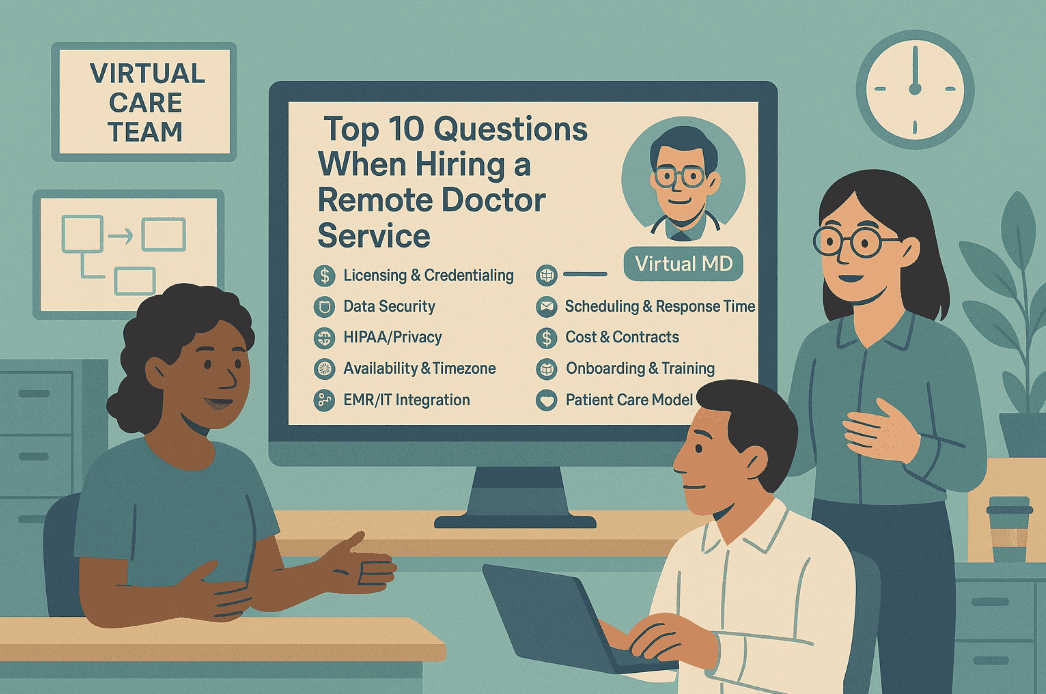
Choosing the right remote doctor service is crucial for healthcare organizations aiming to enhance patient care, operational efficiency, and compliance. This comprehensive guide outlines the top 10 essential questions to ask potential remote physician providers. From ensuring HIPAA compliance to evaluating technological capabilities and credentialing processes, these questions help healthcare administrators make informed decisions. Whether integrating telemedicine solutions, expanding patient access, or optimizing clinical workflows, understanding key factors ensures you select a reliable, physician-led team that aligns with your organizational goals. Dive into this authoritative resource to master the questions that will secure a strategic partnership and deliver exceptional medical support services.
Is the Remote Doctor Service HIPAA Compliant and Secure?
When choosing a remote doctor service, security and confidentiality are paramount. Confirm that the provider is HIPAA compliant, utilizing secure, encrypted communication platforms to safeguard Protected Health Information (PHI). A HIPAA-compliant service demonstrates adherence to strict data security standards, reducing risk of breaches and legal liabilities. Ask about their cybersecurity protocols, staff training on privacy compliance, and incident response plans. For healthcare organizations, partnering with a secure remote doctor service means maintaining patient trust and regulatory compliance while delivering smooth virtual care experiences.
What Medical Specialties and Experience Are Offered?
Evaluate whether the remote doctor service offers the specialties and experience levels necessary for your facility’s needs. For example, if you require telepediatrics, virtual primary care, or specialist consultations, ensure the service has credentialed physicians in those areas. Additionally, inquire about the providers’ clinical backgrounds, years of experience, and prior telemedicine practices. Having specialized, experienced physicians enhances patient satisfaction, improves clinical outcomes, and boosts operational efficiency by matching the right expertise with patient needs.
How Is Physician Credentialing and Licensing Managed?
Credentialing and licensing are critical for risk management and legal compliance. Ask the provider about their process for verifying physicians’ credentials, licenses, board certifications, and malpractice history. Confirm they adhere to state and federal licensing requirements, especially if serving multiple regions. A reputable remote doctor service maintains rigorous credentialing protocols, ensuring physicians are qualified to deliver quality care remotely. This diligence minimizes liability and enhances trust in the virtual clinical team.
What Technology Platforms and Integration Capabilities Do You Use?
Seamless integration with your existing electronic health records (EHR) and practice management systems is vital for operational efficiency. Inquire about the telemedicine platform, user interface, and how it supports secure video consultations, e-prescriptions, and notes documentation. Compatibility with your EHR facilitates real-time data sharing, reduces administrative burdens, and improves patient continuity of care. A provider utilizing advanced, user-friendly, and interoperable technology ensures smooth workflows and high-quality virtual medical support.
Can You Support Bilingual or Multilingual Patient Populations?
If your patient demographic includes non-English speakers, assess whether the remote doctor service offers bilingual or multilingual physicians. Effective communication is foundational to accurate diagnosis, treatment adherence, and patient satisfaction. Ask about their language capabilities, interpreter support, and cultural competence training. Access to multilingual virtual medical support enhances healthcare equity, improves patient experience, and ensures compliance with patient-centered care standards.
What Types of Medical Support Roles Do You Cover?
Beyond direct physician services, many remote doctor services offer a range of clinical support roles essential to clinical operations, such as medical scribes, billers, schedulers, and prior authorization specialists. Clarify which roles are included, their scope of practice, and how they integrate with your team. Incorporating qualified medical administrative support through remote physician-led teams can optimize workflow, increase productivity, and reduce administrative overhead, directly impacting operational efficiency and patient satisfaction.
How Do You Ensure Compliance with Healthcare Regulations and Billing Requirements?
Ensuring compliance with healthcare regulations, billing practices, and documentation standards is critical. Ask the provider about their adherence to CMS rules, billing accuracy, and documentation standards. Confirm they stay updated on policy changes and have quality assurance measures in place. Proper documentation and billing support help prevent revenue cycle issues, reduce claim denials, and sustain legal compliance. Partnering with a provider committed to regulatory standards safeguards your organization and enhances financial stability.
What Is Your Process for Onboarding and Ongoing Support?
A smooth onboarding process minimizes operational disruptions. Ask about their training procedures, implementation timelines, and support during integration. Additionally, inquire about ongoing technical support, quality monitoring, and performance feedback mechanisms. Reliable onboarding and continuous support ensure your staff is well-equipped to leverage remote medical staff effectively, maintaining high standards of patient care and workflow efficiency.
What are the Costs and Contract Terms?
Transparent pricing and flexible contract terms help you plan budgets effectively. Clarify fee structures (per consultation, monthly retainer, etc.), cancellation policies, and scope adjustments. Ensure there are no hidden fees and that the contractual terms align with your organization’s operational needs. Clear financial agreements facilitate long-term, sustainable partnerships, enabling you to maximize cost savings while maintaining high-quality remote medical support.
Can the Service Scale as Your Needs Grow?
Healthcare facilities evolve, and your remote medical support should be scalable. Discuss whether the provider can accommodate increased patient volume, additional specialties, or expanded operational requirements. Flexibility in scaling staffing and services ensures your organization can adapt without disruptions, supporting growth initiatives and expanding access to care. A scalable remote doctor service is a strategic asset that grows with your healthcare organization’s mission.
Conclusion:
Selecting the right remote doctor service requires thorough due diligence. By asking these essential questions, healthcare administrators can evaluate potential partners based on security, expertise, technology, compliance, and flexibility. The goal is to forge a trusted, physician-led virtual clinical team that improves operational efficiency, ensures regulatory compliance, and delivers exceptional patient care. Prioritize these considerations to make confident, informed hiring decisions that advance your healthcare organization’s strategic objectives.
Schedule a Consultation